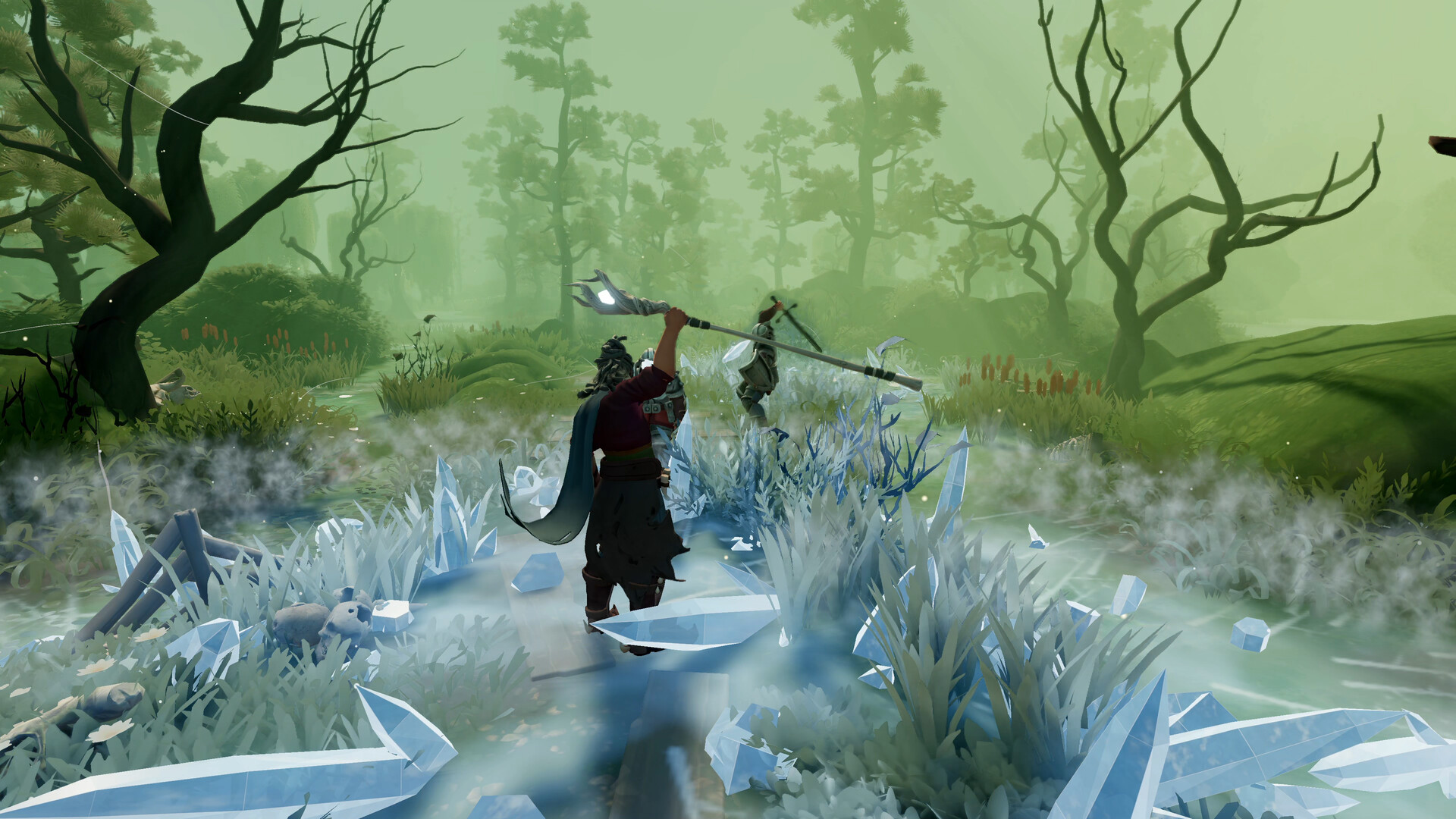
Everlast Server RAM Requirements: How Much Memory Does Your World Need?
Quick Answer
InSpades has never published an official RAM figure for an Everlast: Undying Tale dedicated server, so treat any site quoting an exact per-player number as guesswork. The practical answer is to start at 4GB, which is what Infected Game Hosting's entry Everlast plan gives you for $11/month and suits a small private world for you and a few friends. If you want a public world that regularly draws a crowd, plan on 8GB or more, and use the 48-hour free trial to feel the server out on real hardware before paying.
Everlast plans and prices
Plan
RAM
CPU
Recommended for
Price
Starter
4GB
2 vCPU
A solo world or a few friends
Standard
6GB
4 vCPU
A small group playing most evenings
Ultra
8GB
6 vCPU
A busy world with regular world events
Superior
10GB
8 vCPU
A growing public community
Extreme
12GB
10 vCPU
A heavy public world near the 100-player mark
One thing about that last column: none of it is a ceiling. IGH does not limit player slots on any plan. The recommendations describe what feels comfortable, and a well-kept world can exceed them. The 100 figure is the developer's own stated maximum for a single server, not something IGH imposes on you.
What Everlast actually demands from a server
Everlast runs on Unity, and its dedicated server is a Linux application you install through SteamCMD under app 4268160. That number is worth memorising, because it is not the store app ID. The store page is app 3818450. People paste the wrong ID into SteamCMD every week and then wonder why nothing downloads. The game itself is an MMO-lite action RPG set in Sarkis, a hand-built world where the undead have risen. Your group gathers, crafts, levels skills, fishes, cooks, and takes on quests and world events in a persistent world that stays up whether or not anyone is online. The developer describes the whole thing on the official Everlast Steam page, and that persistence is the point of renting a server in the first place: the world is yours, the rules are yours, and it does not vanish when the host player logs off.
What does that mean for hardware? A quiet world with two people chopping wood is a light load. The heavy moments arrive when a world event pulls most of your server into the same corner of the map, or when a group that has played for months has bases, storage chests and dropped loot scattered across the world. Those are the evenings a weak server shows its hand: rubber-banding during fights, containers that take a beat to open, players warping back a few steps. Memory holds the world state, and fast storage keeps saves and chunk loading from stuttering. Every IGH plan runs on NVMe SSDs rather than old spinning disks for exactly that reason.
How much RAM you actually need
The straight answer: nobody outside InSpades knows the exact figure, because InSpades has not published one. IGH has not run a measured player-count test for Everlast either, and I am not going to invent a number and present it as one. What I can give you is the reasoning that matters when you pick a plan. Memory use in a persistent world grows with three things. How long the world has been running. How much has been built, stored and dropped in it. And how many players are online at the same moment, especially when a world event bunches them together. A fresh world with four people is a different animal from a three-month-old world with forty. So here is my honest guidance by ambition. A private world for a handful of regulars: 4GB is the sensible starting point, and stepping up later is painless.
A public world that strangers actually join: start at 8GB, because public worlds fill at unpredictable times and a Friday night surge is the wrong moment to find out your plan is tight. A serious community world pushing toward the developer's 100-player server limit: take the 12GB Extreme plan and be done with it. Difficulty deserves its own warning, because it catches everyone. Difficulty is locked the moment a world is created and cannot be changed afterwards. PvP and XP rates are yours to set, but the difficulty decision is permanent, so agree on it before your friends join, not after a week of play. Two habits protect whatever plan you choose. Restart the server after every game patch, or players on the new version simply cannot connect.
And expect an older, heavily built world to want more room than a fresh one; if your group has been on the same world since launch week, that is the moment the bigger tiers earn their price.
Matching a plan to your group
Two of you, maybe three on weekends: the Starter plan covers it. You get a 4GB world with fast storage and DDoS protection for $11/month, and you are not paying for room you will not use. Do not let anyone upsell you past this for a duo. A steady group of five to ten who play most evenings: look at Standard or Ultra. The extra memory matters once several people are online simultaneously, each in a different part of the map with their own builds, and the higher tiers also add more processing power alongside the RAM, which is what keeps a crowded world event fight smooth rather than just keeping the world loaded. A public world with an open door: start at Ultra, 8GB for $33/month. Public worlds live or die on whether a random Tuesday newcomer has a good first hour, and an underpowered first impression sends them back to the server browser.
If the world grows a real community with regular events and a Discord full of people waiting for peak time, Superior or Extreme gives you the room to stop thinking about it. Whatever tier you land on, remember the slots logic from the table. IGH never caps how many players can join. A well-optimised world on a mid plan comfortably beats its recommendation; a world stacked with heavy building everywhere may want the next tier up. The numbers are advice, not walls. You can browse how Everlast sits alongside everything else IGH runs on the games page, or go straight to the Everlast hosting page to deploy.
Why host Everlast with IGH
The infrastructure side is short because it should be. Every plan, including the $11 Starter, comes with NVMe SSD storage, DDoS protection, instant deployment, unlimited player slots, 1Gbit unmetered bandwidth, and access to support and a knowledge base. There is no stripped-down cheap tier where the essentials cost extra. A persistent world is only useful if it is actually persistently online, and DDoS protection matters more than people expect once a public world develops rivals or attracts a grudge. The trial is how you buy with your eyes open. You get 48 hours free, on the real server, with a card required to start and the server terminated if you do not upgrade before the trial ends. Test it during a busy session, not an empty one. Send your actual group in, trigger a world event, watch how it behaves at peak. That is the entire point of testing before money changes hands.
IGH does not offer refunds. That position exists because the trial already gives you the informed purchase: you test the live server first, then decide. If you do upgrade, paid plans carry a one-time $3.50 setup fee, and committing to a longer billing cycle lowers the rate. If you want more detail on the hosting side before deciding, the Everlast server hosting overview walks through plans and setup from a different angle.
Setup, from signup to first player joining
Choose your plan on the Everlast hosting page. When in doubt between two tiers, take the trial on the larger one so your test is honest.
Start the 48-hour free trial. Deployment is instant, and your server appears in the control panel ready to configure.
Create the world and set its name, PvP rules and XP rates. Decide the difficulty with your group first, because it locks at creation and cannot be changed later.
Set an admin password and note the connection details from the panel.
Share the details with your group and have everyone join at the same time, then run a world event together. That joint session is your real trial test.
Restart the server after every game patch. Updated players cannot connect to an unpatched server, and this is the step people forget.
Upgrade before the trial ends if the server earned it. If you do not upgrade, the server is terminated when the 48 hours run out.
FAQ
How much RAM does an Everlast server need?
InSpades has not published an official figure, so any exact per-player number you see is invented. My practical guidance is 4GB for a small private world, 8GB or more for a public world, and 12GB for a community pushing toward the 100-player server limit, with the 48-hour trial as the real test. How many players can join an Everlast server?
The developer states a maximum of 100 players per server. IGH does not cap slots on any plan, so the per-plan player figures in the table above are comfort recommendations rather than enforced limits. Can I change the difficulty after creating my world?
No. Difficulty is locked when the world is created and cannot be changed afterwards, so agree on it with your group before anyone joins. Do I need to restart my Everlast server after a game update?
Yes.
The dedicated server runs on Linux through SteamCMD app 4268160, and after a patch the old server build will not accept connections from updated players. Restarting applies the update. Does the IGH free trial cost anything?
No, the trial is free for 48 hours, though a card is required and the server is terminated if you do not upgrade before it ends. Separately, IGH does not offer refunds, which is why testing the live server during the trial matters before you commit. Is Everlast server hosting available at IGH right now?
Yes. Everlast: Undying Tale is a live offering, available from the Everlast hosting page with instant deployment and the same trial terms as every other game IGH runs. What happens if my world outgrows my plan?
Move up a tier.
Because slots are never capped, growth shows up as the world feeling heavy at peak times rather than anyone being blocked from joining, and stepping up to the next plan gives the world room to breathe again.